Designing Organizations for Long-Term Success and Prosperity: A Four-Step Process

Designing Organizations for Long-Term Success and Prosperity: A Four-Step Process

Original post here.

Due to uncertainties and pressures related to global inflation, regulatory scrutiny, the global supply chain recovery, cryptocurrency firms’ bankruptcy, national sovereignty, and among others, finance sector firms and businesses of all sizes have been facing unprecedented challenges this year. Furthermore, it seems that we will all have a bumpy road ahead of us.

These challenges and uncertainties are complex and ever-evolving, making it difficult for organizations to navigate them successfully and achieve long-term business success. Moreover, considering the current market dynamics/challenges, it is crucial for organizations to develop consistent multi-disciplinary strategies and organizational design capabilities to support business growth, enable modern technologies, M&A integration efforts, and overall continuous improvement endeavors.

In this post, I have covered and emphasized the significance of modern organizational design capabilities and also described a four-step process for designing effective organizations that can adapt to such challenges.

Why are multi-disciplinary strategies and organization design capabilities crucial for business success?

Adaptability — In today’s fast-changing business environment, organizations must adapt quickly to new challenges and opportunities. An effective organizational design and flexible operating models allow organizations to respond to changes in the market, customer demands, and technology.

Agility — Agility to make quick and effective decisions. Effective strategies and organization design allows organizations to make quick decisions by decentralizing decision-making and giving more autonomy to employees.

Innovation: Innovation is essential to long-term success. An effective organizational design encourages innovation by creating an environment that fosters creativity, experimentation, and risk-taking.

Employee engagement — An effective organization design aligns the goals of the organization with the goals of its employees. This alignment leads to higher employee engagement, satisfaction, and talent retention.

Based on that and also recent experiences, I have seen there is a four-step process that is common across the industry for designing effective and competitive organizations:

  1. Define the strategic goals and objectives: The first step in designing an effective organization is to define the strategic goals and objectives which includes identifying the core business and technology competencies of the organization, regulatory requirements and the markets it operates.
  2. Design the organizational structure and operating models: The second step is to design the organizational structure and respective operating mode and governance guardrails. It includes defining the roles and responsibilities of each employee and proposed constructs, determining the reporting structure, identifying the key decision-makers and defining control objectives to address regulatory requirements.
  3. Define the systems and processes: The third step is to define the systems and processes that will support the organizational structure which includes the communication and collaboration processes, the performance management systems, and the training and development programs.
  4. Monitor, Adjust and Sustain: The final step is to monitor and adjust the strategy and organization design as needed via Key Performance Indicators. It contemplates reviewing the structure, systems, and processes to ensure that these artifacts and practices are aligned with the strategic goals and objectives of the organization.

The four-step process is a proven method for designing effective organizations. Ideally, these steps are executed in a sequence. However, the reality is that each organization is unique and requires a customizable approach.

These capabilities are critical for the long-term success of any organization especially ones in the finance sector. Laser focus on creating an effective multi-disciplinary strategy and organization design capabilities that are adaptable, agile, innovative, and aligned with the business, technologies and employees’ goals.

Hope these thoughts and steps help! As a reminder, take these steps with a “grain of salt” and use them as a simple guideline along the way.


Six ways to communicate during moments of unprecedented uncertainty

Original post here

The pervasive use of technology during COVID-19 era is triggering a whole new genre of communications. As the world struggles to keep up with the unprecedented speed and scale of disruption, companies are facing the crisis of managing employees, businesses, and clients amidst the growing “discomfort”. This important challenge requires the engagement of stakeholders across the whole business value chain. During a time like this, an additional sense of urgency is driven by the need for employee activism as well as increased awareness and demands.

Communicating effectively is one of the most important skills in life. At the first level, it appears there is nothing new about it. Current times urge for a more effective but also a more “humanized” approach in delivering news, sharing instructions, aligning expectations, check-in and out with your team members and managers, and among others communication needs.

Managing communication fatigue

Instead of aiming to “manage” your conversation and drive the whole effort, you become willing to go with the flow using a flexible agenda, focusing on the bright side and great opportunities ahead to come once we better understand the constraints of a chaotic situation hence we can focus on applying the right methods and approaches to handle and manage it.

In order to communicate effectively, the goal is to discover how to use your whole mind, not just the rational and logical side that is driven by your left-brain but also moving to a more diffuse and emotional approach (right-brain). In fact, it is not an easy exercise.

Therefore, during moments of crises, dysfunctional behaviors tend to surface even more, but we are also seeing waves of compassion and empathy being communicated by effective leaders. The most compelling messages are the ones that explore vulnerabilities and fears of the communicator which makes the audience connect and listen with mind and heart.

Based on that, I would like to share some thoughts on communication that has been helping clients and ourselves to navigate and cope with current challenges. The list is not exhaustive, but it can help to think and refine the way you manage communications.

Stay positive

Keeping a positive attitude helps to set up the stage for the critical message that you want to share. In this current scenario, most of the people are reeling with anxiety and stress more than ever, hence infusing a positive note in your tone and ways of communication, will impact significantly the way people open up and understand the message.

You must keep the seriousness of the topic and at the same time exercise compassion when communicating critical and business as usual topics.

Communicate with enthusiasm and joy

Stay here and now! Most of us understand the basics of using and managing voice, tone, volume, body language and visual resources. Therefore, it is extremely important to be cognizant of how your audience is responding and reacting. Use the best of your emotional intelligence and focus on the moment. Although you have an agenda to cover, at the end of the day, it is all about your team needs and how fast we can organize ourselves to better support our people and serve our clients when things start to get back to a normal state. Use inspirational quotes, real-life examples and keep the environment warm and open.

Open up

Despite the topic, subject and current communication plan in place, always talk a bit about yourself.

I know some people do not feel comfortable about this approach hence whenever you find a good opportunity and you feel comfortable, try to share a bit about yourself, the way you see the world and your personal take on a given subject. Remember that it needs to be authentic and honest, otherwise, it can generate the opposite effect. This is how relationships are developed and nurtured.

Bring your best self forward

Having a sense of humor helps you cope with difficult situations and foster empathy. There is nothing better than a good laugh after a series of discussions about business and challenges. It works as stress relief and people feel light and joy.

According to psychologists, hope, gratitude, and sensor of humor belong to the set of strengths called transcendence. When combined, it helps us develop connections to the world and exercise a holistic view of our emotions.

Do not overwhelm people with information and instructions.

Today, with the exception of the essential services, most of the work is being performed remotely. Hence, there is a need for short and more frequent communications instead of long meetings and announcements.

Based on that, short and specific agendas need to be in place to address key messages and also to allow people to digest and reflect on the information. The suggestions are shorter meetings and more frequent following up sessions to keep people informed about the next steps and how as a group we may shift priorities according to what is learned on a day to day basis.

Stay open! Make yourself available for one a one conversation.

Talk to your peers, managers, family, and friends. Let people know that they can reach you out for a conversation. Making yourself available for one a one conversations demonstrates resiliency, empathy, and leadership. This way, we grow as a community and society. The sense of belonging and inclusion increases the feeling that we are all in this together and together, we can thrive over unprecedented situations.

Lastly!

Despite the fact that we are familiar with the most common communication techniques, there is a big difference between communicating effectively (skill related) and communicating profoundly with inner intelligence and qualities of mind. Paraphrasing the author Judy Apps who wrote the book “The Art of Communication: How to be Authentic, Lead Others, and Create Strong Connections”, the difference is an art, not science.

The author gives us a great analogy to think about. “If you listen to any great musical performance competition, every finalist is brilliantly accomplished technically but the judges invariably choose the winner that goes beyond the techniques which are their ability to communicate something special”.

Stay safe! Keep the communication channels open!

AI Innovation Challenges

Most of the companies that I have been working with want to become a technology company somehow which is triggering a huge effort in terms of business and technical transformation capabilities.

Nowadays, the majority of CMOs (Chief Marketing officers) and senior management people praise and pitch that their companies are embracing and using AI to improve their client service workflows in an inspirational way.

The challenge is that it goes beyond technology adoption. Human talent, culture and a holistic business view need to be in constant motion to shift directions quickly based on business hypothesis. For example, if your company is not dedicating a significant effort in understating its customer journeys and taking actions to manage customer services accordingly, you may expect bigger challenges in adopting or incorporating AI capabilities. Why? The challenges may vary from a lack of business agility practices, experimentation culture and capabilities to revealing the client’s journey. It doesn’t matter if you are a technology service provider, start-up, ecosystem player, or from traditional non-tech industries that now must deal with technology as a core engine in trying to stay relevant for their customers and innovate.

In such context, adding “AI” promises and benefits to your portfolio/product became a “must”, otherwise you may lose the momentum and pass the message that you may not be ready to explore current opportunities that will help you or your company to shape the future.

These phenomena may explain why Artificial Intelligence is one of the most misused terms in the industry today. According to the survey from London venture capital firm MMC, 40 percent of European startups that are classified as AI companies don’t use artificial intelligence in a way that is “material” to their businesses. The causes may vary from metadata classification from analytical websites to investors appeals to the theme that may drive contribute to the hype in the market now. Interestingly, this fact backs up Mr. Tripathy’s thought process.

In a recent podcast, Daniel Faggella (Dan runs one the best AI podcasts AI in the Industry) interviewed Abinashi Tripathy (founder and Chief Strategy officer at Help Shift – His primary focus is to apply AI to the future of customer services). Abisnashi has shared his view on the challenges of conversational interfaces such as chatbots, automated call services and so on. He has highlighted that it may take a couple of years until those AI capabilities are robust enough to a meaningful degree.

According to Mr. Tripathy, from a customer service perspective, AI is very good at doing classification but it’s not robust yet at maintaining a sustained conversation. Therefore, it is very effective in matching knowledge assets that a company has through a specific question and extracting intents that can be applied to knowledge assets and curated content. He has explained that one of the problems with AI today is the core start problem which usually needs a ton of data to be tackled in case you apply deep learning techniques but considering recent advances in NLP, it is possible to extract intent off an incoming question in combining two statistical models and one sort of shallow learning which does not require huge amount of data upfront, specifically for text-based NLP.

One of the highlights from the interview is that both Google and Amazon have been investing and working on solving sort of the natural language challenges with an army of PHDs and seems they still have a ton of work to do. For example, Amazon with its Lex platform. They use Lex to power Alexa built-in as a consumer device that people can use in their homes with very limited use cases but they have not deployed this technology in their customer service chat yet whether it’s the phone channel or whether it is the chat experience because they know that the technology’s not ready to go beyond basic use cases.

According to Mr. Tripathy, technology will get to the point where the accuracy levels are very high and then we can shift from the sort of decision tree bots to a more human-like conversational bot. He foresees AI breakthroughs coming from big consumer companies like Google, Amazon, and Microsoft as they have the most extensive data and capabilities to validate models and algorithms that then can be used by startups in consuming those services as a platform instead of focusing on the core algorithms. He has also mentioned IBM work as an “on-premise” model due to its enterprise focus.

On the other hand, startups may focus on how to solve specific vertical problems or business cases as they do not own consumer data, human capital and resources do compute it.

In summary, large consumer data sets are the new gold of our century! It may also reflect the challenges to innovate with AI and the hype nowadays and also back up the interesting insights from the MMC report. Overall, we need a more realistic expectation about where AI can be applied and how to get the best of its usage. Even in other industries such as pharma, finance, telcos and retail that performs research and development may do prefer to join forces with big tech companies in connecting their data to these big consumer data sets and platforms to keep innovating.

I would love to know your opinion on this matter. Please feel free to add your comments.

Innovation Agility Talk @AgileCamp in USA

Hello Everyone!

I am glad to be part of such great conference as well super glad for the opportunity to speak about one of my passions in the #agilecamp Dallas Edition this year. Innovation and Agility!

This event take place across USA country, bringing together professionals from the Agile community for a day of exciting education, activities and networking. Presentations are led by Agile experts and touch on the newest tools and Agile methodologies. Activities are exciting workshops that put techniques to the test and advance professional skills. While receptions and breaks bring the Agile community together for a valuable opportunity to network with industry leading professionals.

EARLY BIRD deadline is fast approaching and is good only through this Friday, 11/17! If you are nearby do not miss this opportunity! I will be talking about the Agile Mindset in Driving a Culture of Innovation (http://agilecamp.org/dallas)

So, how the innovation agility mindset can improve our mainstream approach in creating and maintaining new and current products and services? Are we in the correct path?

Currently, many organizations have been spending precious resources in searching the next big disruptive idea then I do invite you to explore the innovation agility practices to uncovering good problems related to your business, your customers and new emerging markets.

Let´s explore a new perspective touching key cultural aspects of agility focusing on how to develop innovative approaches to incorporate a new way of work adopting key innovation agility practices considering the human needs and cultural aspects as key factors to create better products and services for today and tomorrow´s markets.

See you all in Dallas! Take care! Raf


MIT Webinar: How Technology Leaders Become Breakthrough Innovators

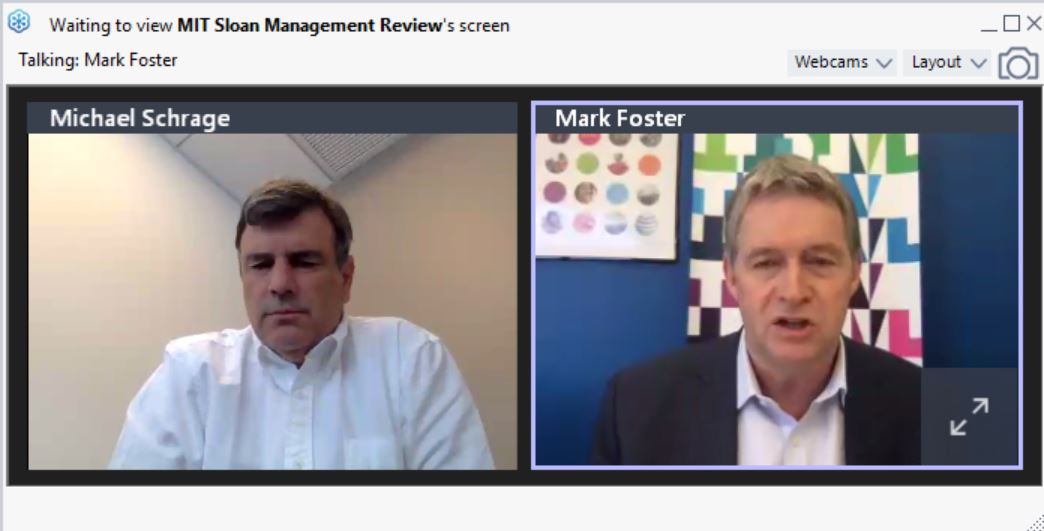
Today I have attended a very interesting webinar presented by Mark Foster (GBS VP) and Michael Schrage (Research Fellow at the MIT Sloan School of Management’s Initiative on the Digital Economy. The main theme was: How Technology Leaders Become Breakthrough Innovators.

I am also so glad to share that Tatiana Feitosa Lima and I were both invited to support the follow up actions after the webinar in helping clients as Agile and Design Thinking Transformation Agents along with some worldwide super great IBM professionals. Then, I would like to share some key topics and insights I got from this webinar!

The conversation has started exploring topics related with Digital Experimentation and Virtual Experience Cycles. Michael has explained that in order to drive key actions towards an economy of innovation, we all need to focus on how we can improve the experiences of our users considering how they deal and interact with digital services and social media.

They have also commented about the challenges in touching organization´s culture allowing people to experiment more and embrace failure as their main engine to innovate and to stay relevant in the market.  The global market is more dynamic than ever, faster and full of digital experiences that does not allow big delivery cycles anymore so that it is essential to know how to deal with the lack of clarity in our journeys and learn more and more then deliver faster!

Then there were provocative questions also about how to really innovate? How to innovate in a safe way? Why a huge number of organizations still struggle with such experimentation mindset?

Capture

It was clear that the experimentation efforts needs to be performed in a very organized way to support  key cultural aspects.

Yes, it is ok to experiment without clarity about the final outcome! Yes, it is ok to go with both incremental or breakthrough innovation approaches! And in the end of the day, it is all about how leaders and people deals with failure and learn from it!

Do you blame people when they try new approaches and fail? Or do you have a consistent way to learn from those failures and apply this knowledge to get better? Does it sound like a very basic agile thing, doesn’t? 🙂

In such context, all information matter! Structured and un-structured data both matters in gaining insights on how to get up to speed, deliver faster, allow good virtual experimentation cycles then scaled it all up with agile, design thinking and DevOps practices.

Particularly, I have been researching, writing and presenting themes about Innovation Agility and I was glad to see that both Michael and Mark have mentioned the need to focus on good problems instead of generate ton of ideas with poor execution practice which is the core of a good innovation agility strategy!

Basically, the main point here is to listen, listen, listen and to pay more attention to our ecosystems which includes our internal and external worlds.

And finally, I would like to share this thought with you: If we want to stay relevant in our global market or even in our job, we need to focus on generating true value, great products and services to our clients which mean being less worried about own super cool processes, super frameworks and current buzz words people make.

Such processes and frameworks are all key aspects in our journey but they are just things we can use to get better as organization as well as human beings.

If you want to know more contact an IBM expert here!

Take care folks! Rafa!


Padawan´s Series: Scrumban or Agile@Maintenance!

Yes! Getting back to the basics! Yes, I know it is not a brand-new topic but people often ask during my workshops about how to incorporate and adopt agile practices within their Technology maintenance projects.

Although the basic flow is very simple and nowadays everyone says ¨I know everything about Kanban¨ or ¨my team has mastered in using Kanban¨ then I do often realize people over-complicates its usage.

Kanban is Japanese word that translates to signboard in English. It was first developed and adopted by Toyota late in 1940s. It is a simple scheduling and demand management system used to create, support and deliver a set of products and solutions.

What are the initial steps in adopting a Kanban system in maintenance projects?

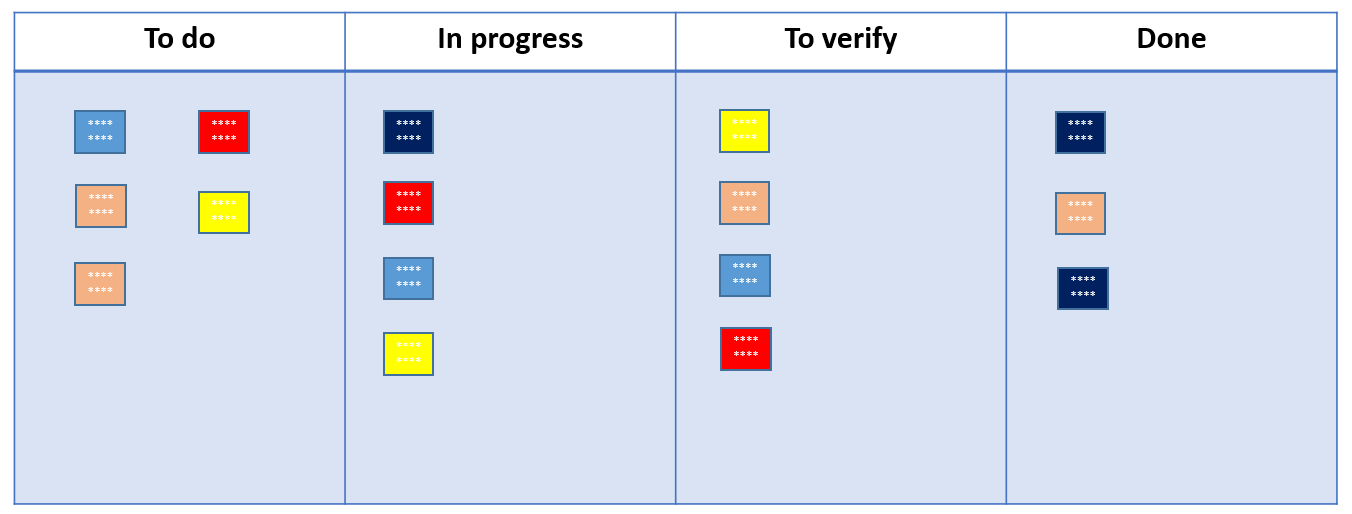
First, you need to define a basic workflow in reflecting a sequence of steps in producing something and it will be dependent on the work you are doing and the processes used by your organization.

What is a simple set of steps?

Basically, the set of steps should reflect the tasks your team is executing each day. Pretty simple steps as follow:

  • Initial/ To do:
  • In progress
  • To verify/To check
  • Done

How to visualize the work?

You and your team can visualize the work using a physical or a digital board. This visualization board is very effective for the team members within an organization, program or project that are using a kanban system.

You can stick a card or a post-it note and move them manually per the flow or use a digital solution depending on your needs. It is a special need for non-collocated teams or teams that may support more than one customer at the same time.

Today there are exceptional tools you can use such as:

or just use a physical board if your team is 100% collocated!

Now you have a workflow, a board system. What is next?

A key success factor in a kanban system is about determining priority and WIP (Work in Progress). There is a need to define a method of priority setting to guarantee that the most important tasks will be carried our first or as soon as possible.

On a kanban board the most important task cards or post-it notes are placed higher up the board and maybe with a color system that helps highlight the top items.

The priorities can be defined by one person such as a product owner, one experienced team member on the product or by a self-organizing team.

It is very important to establish work in progress limits. It does allow individuals applying this “pull system” to manage the level of multitasking.

Please notice:  A multitasking team may end up with concurrent activities that may impact the effectiveness of the work which means that an incomplete item should never be moved to a next step of the flow. Focused teams produce high quality products/solutions.

“Scrumban” or whatever name you want to use: How to get better to improve the process flow?

Now you have the demands organized per your flow and you can visualize them in the board. As time goes on, you will find ways to improve the way you and your team work. You can use daily stand up meetings to address and remove blockers as well promote team’s collaboration.

Prior to a planning discussion and after 2 or 3 weeks, in a fixed time box period, you may have a retrospective meeting to find out how to improve the current process.

As demands go up and down you can discuss about the WIP limits and the team may decide if there is need to adjust the limit. This approach can be adapted per your needs in supporting the business, program, project and organizations.

I want to hear your opinion!

Business Agility 2017 in New York – Day 2 Review

Leading the Transformation

Second day and guess what? Amazing stories and insights about the transformation journey DBS has taken to emerge as a more agile organization by Paul Cobban. I still remember a reaction from someone from audience when Paulo talked about “making banking joyful for both customers and employee.

The person said in clear and loud sound “Oh my!” following by a big and surprised laugh. Usually this the reaction when people talk about the benefits of agile mind set in big and traditional industries.My wife worked for a bank for many years and believe me! She and her ex-colleagues were not living a joyful moment there.

Paul did an amazing job in walking us through DBS’s journey and the main transformation points that drove DBS culture to a wining bank among competition that were comprised by a set of practices from lean, agile, design thinking, innovation, big data and motivated people looking for change.  He make a joke about the meaning of DBS: Damn Bloody Slow but it turned out to be leading the market in Singapore’s area.

  1. Eliminate the waste: a lean approach to understand your cost per transactions or a simple metric that can help you identify waste in your day-to-day activities.
  2. Design from Customer Back: understand your client’s journey. Get close to their routine and get to know them and make all efforts to design your organization to serve and add value to them. The client is your boss not your manager, process and super fancy group of buzz words.
  3. Be data driven: when you are able to combine and match data (structured and unstructured data) with client’s information the magic happens. Decisions can be more effective and the impact in terms of value that client perceives is huge.
  4. Create a culture of innovation: Allow people to experiment and try new ideas then let them fail and learn from the experience. I bring this sentence with me every time I am struggling on how to implement something:  Start small and grow fast!
  5. Codify the culture: make sure everyone is talking and walking the speech. Lean practices to eliminate the waste, design thinking, data and innovation culture. These are the pillars that might lead your organization and clients to a new level of joyfulness

Continue reading

Business Agility 2017 in New York – Day 1 Review

February was the month selected for the first Business Agility Conference. In the core, authentic short stories and deep dive sessions focusing on organization design, marker disruption, product innovation and agile leadership. I want to share some highlights from both days that have caught my attention as well some interesting insights after eight deep dive sessions.

Introducing Business Agility

Steve Denning has opened up the conference with a very powerful insight: Agile is a mindset. That is it! In addition, Steve has explained about the friction that exist when you try to move forward with your agile team surrounded by a ton of bureaucracy making all transformation efforts being not sustainable.  He has shared stories from big tech companies that have embraced agile in the core (mindset) and now these companies are thriving their way focusing on delighting customers. Using the Copernican example to illustrate how clients becomes the center of every decisions, Steve highlighted the importance of the agile culture that enable companies to move from a centric view to client centric view,  surrounding their clients looking for ways to inspect and adapt their strategies into tactical plans that are based 100% on client’s needs.

Phil Abernathy has presented the maze and madness! Great insights on how structuring your business for agility. In other words, get rid of the madness and the maze! Phil has provided thoughts and examples on how such business structure looks like. First, understand the size and complexity of your maze:  several hierarchical levels cross management systems, dozens of communication layers and complex metric systems. Then, here we are!  Lost in the maze, trying to find maze runners that can help in finding the way out. The outputs (not outcomes)? Spending millions on isolated transformation initiatives, new buzz leadership roles and new departments organized in the same way but with fancy names and the madness is back again. Phil proposes a structured way to understand the impacts (unhappy customers, shareholders, and employees), symptoms and then the real root causes (complex organization structure, lack of trust and transparency, leadership talent). Start with big goals such as 40% reduction of time to market, 70 to 500% cycle time improvement, 30% cost reduction then test your hypotheses via pilots, inspect and adapt, course corrections and make it big from the core. Continue reading

Business Agility Conference 2017

bac-2017-logo Hello Everyone! I was counting the days for this conference on business agility! This is the first conference of its kind. There are many cool topics, great people as speakers, thought leaders and deep dive sessions  that will blow your mind with new ideas. The topics will be presented on a TED format and will cover the following:

  • Introducing Business Agility
  • Governance & Strategy
  • Leadership & Empowerment
  • Leading the Transformation
  • People & Engagement
  • Fearless Change

I will contribute as a facilitator in the deep dive sessions and I will be sharing new ideas and thoughts along the week. For more information, please click on the logo above. See you all there!


Palestra sobre Singularidade

O amigo e professor Dr. Helio Lemes Costa Jr. apresentou uma palestra na Campus Party 2014 em São Paulo. O tema foi “Singularidade: Os ciborgues escaparam da ficção”. Segundo a definição do autor Ray Kurzweil,  a singularidade é uma era em que nossa inteligência se tornará cada vez mais não-biológica e trilhões de vezes mais ponderosa do que é hoje — o surgimento de uma nova civilização que vai nos permitir transcender nossas limintações biológicas e ampliar nossa criatividade.

Durante a palestra, o Professor Helio apresenta a sinergia entre a genética, nanotecnologia e robótica e faz um paralelo com a série de TV “O Homem de Seis Milhões de Dólares”.

Afinal de contas, o que era apenas ficção científica na década de 80 é realidade atualmente. A trilha sonora é de minha autoria pois sou um leitor assíduo dos textos e livros de Kurzweil. 🙂